I don’t know how to meditate
“I don’t know how to meditate”... I am so tired of hearing this.
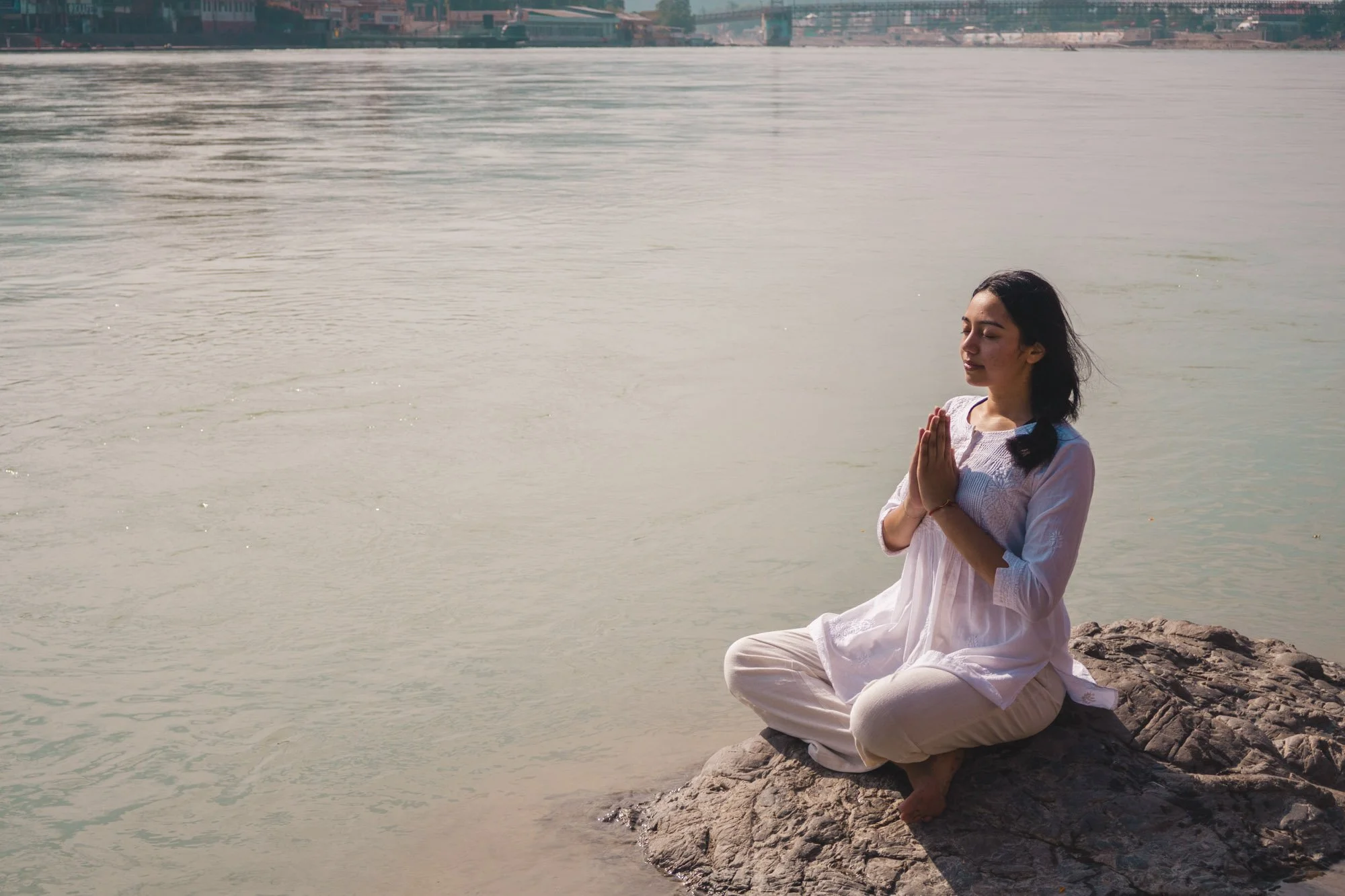
I hear it all the time, and I completely understand why.
Meditation has somehow become this elusive, almost intimidating thing. Like there’s a “right” way to do it, and if your mind doesn’t go completely quiet, you’ve failed.
Somewhere along the way, especially in the West, meditation got packaged into techniques, systems and structured programs like MBSR that can make it feel more complicated than it needs to be.
At its core, meditation is much simpler and much more human.
In traditional yoga, meditation isn’t something you jump straight into. There are three stages:
Dharana — concentration
Dhyana — meditation
Samadhi — realization
We start with Dharana (concentration).
This means placing your attention on one thing: your breath, a sensation in the body, a mantra, a sound, even a visual point.
That’s it. Choosing one place for the mind to rest.
With practice, that focus becomes more continuous. Less start-stop, less scattered.
That’s when it begins to shift into Dhyana (meditation) — a more steady, uninterrupted flow of awareness.
And yes, your mind will wander. Constantly. That’s not a mistake, it’s the training.
Each time you notice and return — that’s the practice working.
Even experiencing a few seconds of that steady awareness? That counts.
And then there’s Samadhi (realization).
This is the state where the separation drops away. There’s no strong sense of “you” focusing on something — just awareness itself.
So… how do you actually start?
Here’s the simplest way I know how to say it:
Focus on something. Anything. You don’t even have to close your eyes if you don’t want to.
There are so many techniques, postures, and even mudras (hand gestures) out there, but constantly jumping between them can make it harder to build consistency. It’s often more helpful to choose one method and stay with it for a bit.
We can explore them but for now, let’s keep it simple.
Sit in a comfortable position — Sukhasana (an easy cross-legged seat) works well. Try this simple mantra-based practice. 3 minutes is more than enough!
So Hum — meaning “I am.”
Inhale: So
Exhale: Hum
Start by saying it out loud.
Then soften it to a whisper.
Then repeat it silently in your mind.
That’s it.
It often helps settle the system and makes it easier to focus.
I promise you your thoughts are not the problem.
Saying “I can’t meditate because I have thoughts” is a bit like saying “I can’t do yoga because I’m not flexible.”
Practice is what builds the skill.
I had someone tell me recently, “I tried meditating, but I still had thoughts… so it didn’t work.”
That’s actually exactly how you know it is working.
Start small. Stay consistent. Don’t overthink it.